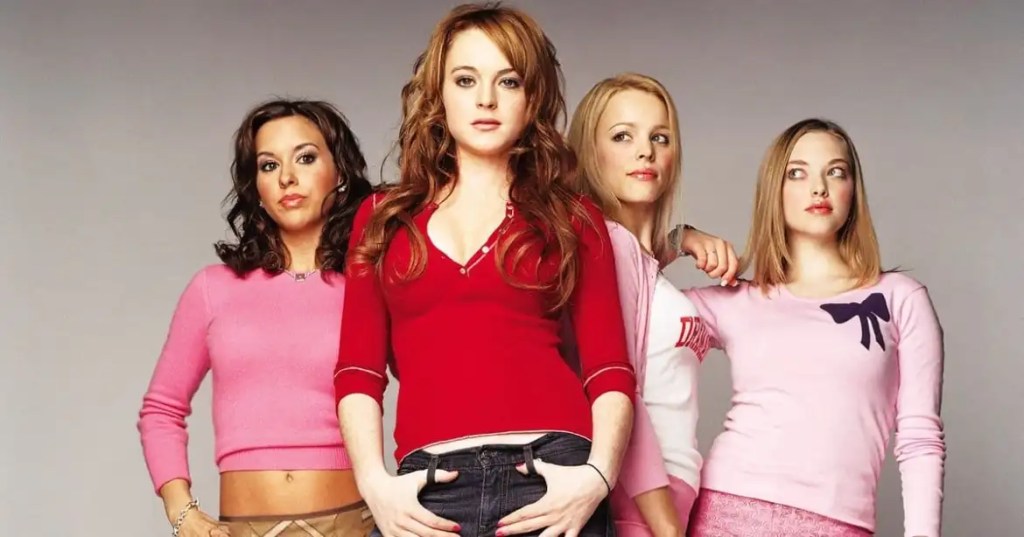
Is Mean Girls still an Accurate Social Commentary on Female Friendships? Or Has Feminism Encouraged us to Treat Each Other with More Respect and Kindness?
Last week, I went to see Mean Girls: The Musical at the Manchester Opera House and I thought the production was brilliant, one of the best stage musicals I’ve seen (and I’ve seen a lot!). Although some aspects of the adaptation differ to the original filmic telling, so many scenes and storylines reminded me why I love the film so much, and why it was one of my favourite films when I was a teenager. The film really encapsulates what it means to be a teenage girl; there are so many characters who fit into different cliques and I think many female audiences will have related to at least one at some point in their life. This week, I rewatched Mark Waters’ Mean Girls after having not seen it for a couple of years. Before I hit play, I was expecting to view this film differently to how I had done in the past. Mean Girls was released in 2004 so I was expecting some of the themes to be outdated and not relevant to today’s society because female friendships and feminism have come a long way since then, right? Well, I’m not so sure. I may have left school a while ago now (6 years to be exact), but many of the experiences portrayed in the film align with how many of my school friendships functioned. Perhaps Mean Girls’ key narrative is just as relevant today as it was 20 years ago.
Coincidentally, we had International Women’s Day this week; a day where we’re encouraged to celebrate women’s achievements, strengths and courage. As well as this, we’re reminded that there are still many social differences between men and women, and that gender discrimination still exists, meaning feminism is still crucial to today’s society. When I was watching Mean Girls, I kept thinking that although International Women’s Day celebrates women and highlights these gendered differences, it also inspires us women to think about the ways we behave towards each other, both to our faces and behind each other’s backs. I think it’s fair to say that by the end of the film, it becomes clear that every female character is a ‘mean girl’, whether they’re a popular Plastic, a “homeschooled jungle freak”, or an alternative social outcast. The film highlights that many female friendships are inherently mean, and we see that friendships can sometimes be used as a weapon to manipulate others and bring other girls down (quite drastically in the case of Mean Girls).
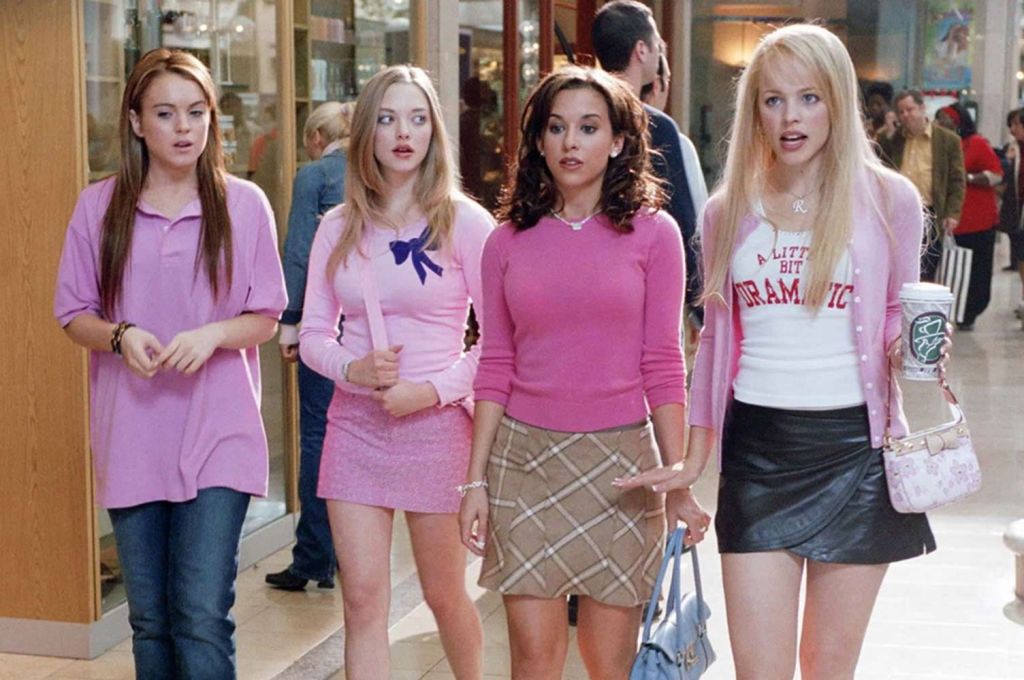
At the beginning of the film, it’s easy to empathise with Cady; she’s lived in rural Africa for 12 years and is expected to fit into urban American society from the offset. She initially didn’t understand social conventions because she grew up in a completely different setting and learned to live a lifestyle that shares very few similarities to suburban America. When those of us who understand urban western culture see Cady struggle to make friends on her first day of school, we may feel sorry for her; it’s not her fault that she doesn’t know how to carry herself to fit in or how the American school system works. The first two groups of people Cady makes friends with could not be more different to one another. She first meets Janis and Damian, labelled as “Art Freaks”. They immediately lead her astray, tricking her into skipping one of her classes, but they also understand the social hierarchy put in place at North Shore High School so do also have her best interests in mind. Very soon after, she meets The Plastics, a trio of popular girls who make it their mission to make everyone else at school aware that they are fundamentally better than them. When Regina George, the queen bee, asks Cady to sit with them at lunch, Cady is hesitant, but it seems as though she sits with them anyway because she doesn’t feel like she can say no. Given how lonely her first day was, Cady can’t afford to reject people who may end up being her friends. From here, things go downhill; her friendship with Janis and Damian becomes stained and Cady goes from being a fake mean girl to mess with The Plastics, to a certified mean girl who really does put looks and popularity above her studies and genuine friendships.
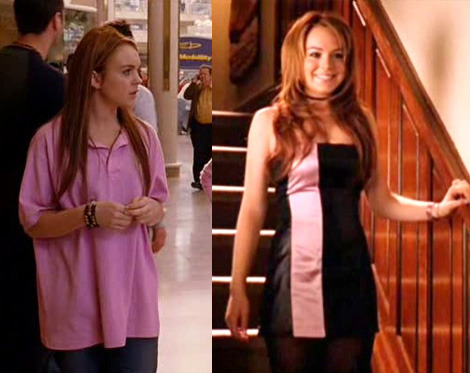
It’s disappointing to see Cady become so mean and materialistic, but it’s what she had to do to keep her friendship with The Plastics strong. That beings said, it’s important to recognise that these behaviours are not acceptable, despite them being the social norm. Throughout the film, we see Regina George make many unpleasant passing comments about girls she doesn’t even know, and Cady picks this up too in order to fit in with the clique. The Newport Editorial Team explain that ‘The high value girls place on friendship can result in an intense fear of rejection and isolation. That fear is part of why teenage girls are so mean. Because friendships are so important to girls, they understand how to wield them as weapons’. Throughout the film, friendship is used as a weapon in so many ways. Regina uses her friendship with Gretchen to boss her around and be rude to her; she knows she can get away with this because Gretchen loves being a Plastic and knows she might lose her popularity if she stops being friends with Regina. Janis also uses her friendship with Cady as a weapon, as she manipulates her to become a double agent to bring Regina George down. Cady doesn’t know any better, as she has not experienced a typical American teenage friendship before so doesn’t see the way Janis is controlling her at first. Both Regina and Janis know this and use it to their advantage.
Finally, I want to talk about Regina George’s downfall. This aspect of the plot is something that I have mixed emotions about. On the one hand, it is fun seeing the queen bee be knocked off her pedestal and be humbled; no matter how perfect she looks and how much she likes to put others down, she will always be equal to everyone else and really she needs to understand that. On the other hand, it is so clear that image is everything to Regina, so the fact that Cady and Janis make her gain weight when she’s trying to lose it, and sabotage her relationship with Aaron, may be taking it too far. They’re not just ruining her social status at school, but they are impacting her personal life, too. Similar to Cady, Regina used to be friends with Janis until she changed to become the person we see in the film. Based on Cady’s storyline progression, it would be fair to assume that Regina also re-invented herself to fit in with social standards and to protect herself from criticisms from others. Although she sees herself as more important than all the other girls at North Shore, Regina likely knows that she has to keep up appearances to keep others worshipping her, as this seems to be a key aspect of teenage girl friendships and appearances.
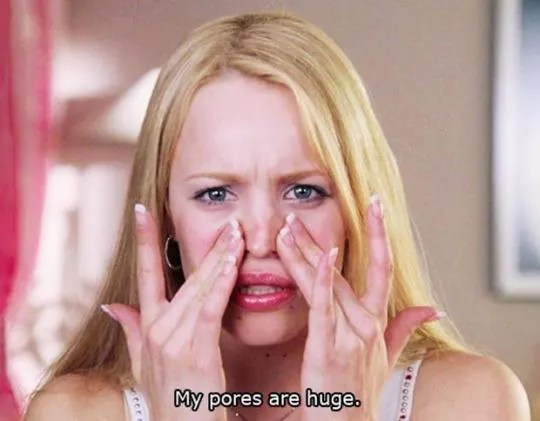
For me, this outlines another reason why we still need International Women’s Day. There still exists a significant gap between the way men and women exist in modern society. The UN finds that ‘Nowadays, no nation has closed the legal gaps between men and women. Right now, women have only 64 per cent of the legal rights that men hold worldwide’. So if men and women are still not equal, why are women and girls further disadvantaging themselves by fighting against each other instead of banding together to fight these injustices? By dragging each other down through snide comments, backstabbing behaviours, or even ruining each other’s reputations, we’re setting ourselves further back over petty things that create further distance rather than form alliances. Mean Girls really highlights this; the ways that the girls in this film behave towards one another does not indicate feminism, but rather aligns with the way men sometimes put women down due to their appearances and personal interests. Women need to fight these injustices together, setting aside our differences and continuing to work hard to fight for equal rights. Unfortunately, we do still need International Women’s Day, and I think the fact that Mean Girls’ narrative is still as relevant today as it was 22 years ago really proves this.
Close Up Capture Rating: 5/5
 Em's Close Up Captures
Leave a comment