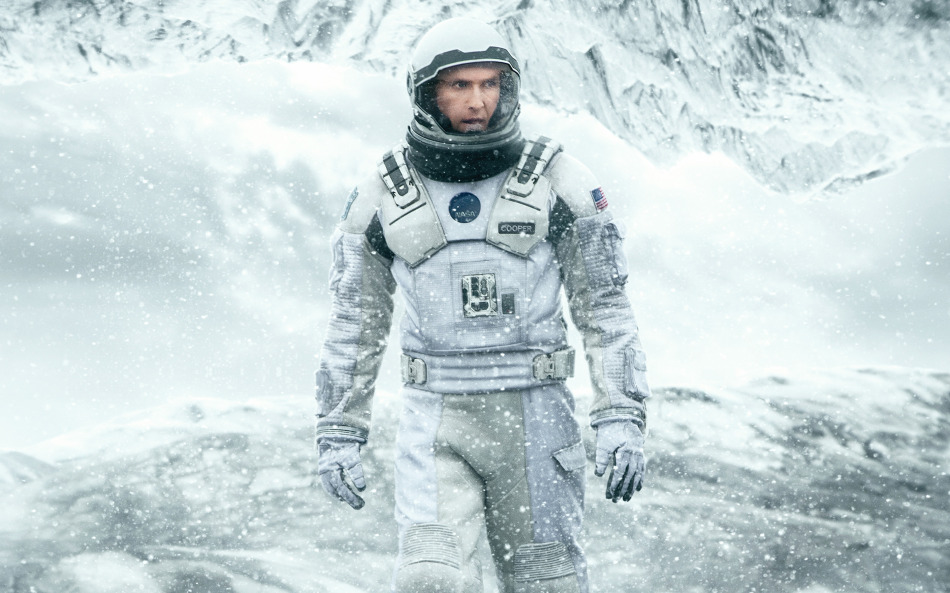
A Film of Wonder, Beauty, and a 10/10 Soundtrack
Space is one of those things that I can’t think about for too long. It makes me feel like I don’t really know anything about the planet or the galaxy we live in, and dwelling on it for too long makes me sit and spiral into existential panic. However, it’s been hard to avoid over the last couple of weeks with the Artemis II mission to orbit the moon dominating news headlines. As much as thinking about space makes me feel small and insignificant in the countless galaxies there are in the universe, this recent mission alerted me to the fact that I really haven’t seen many space films. I think this is because sometimes I watch them and think they’re just unrealistic, but really I think they do explore the many possibilities and outcomes that can come with launching a small handful of brave individuals into the unknown, not knowing if they will truly ever come home again. After considering this, I decided to watch one of the most talked-about space films there is, that until now I had actually never seen: Christopher Nolan’s 2014 hit Interstellar. For me, there was much to like about this film, but also some areas that made it hard to watch. I’m very far from knowledgeable about space (or physics as a whole!) and found it hard to know what was actually happening at many points during this film. This resulted in me following the narrative along with a synopsis I found online to be able to keep up. This is 100% my personal problem, but felt like I couldn’t be immersed in the film as much as I could have been, which is quite disappointing for a film with a fantastic soundtrack and breathtaking scenery. Nevertheless, I watched it all and found areas I liked, and themes I didn’t quite get along with.
Gender
Gender is something that I take issue with in much of Christopher Nolan’s filmography. Nolan seems to focus on the male hero in many of his films (for example The Dark Knight and Dunkirk). Actually, if you Google his filmography, every poster features a man in a heroic stance at the forefront. If Nolan chooses to focus on male heroes in his films, that’s completely his prerogative, but I take issue with the way that many female characters are portrayed in his films. Throughout Interstellar, we mostly follow a retired NASA pilot Cooper (Matthew McConaughey) on his journey through space to find an alternative planet to begin human life on, as life on Earth is coming to an end due to the extreme weather changes that are causing crops to die. Although he is the pilot of the spacecraft, his crewmate Brand (Anne Hathaway) had actually worked on this mission with her father since way before Cooper was even aware of it. Brand presents to be an incredibly intelligent character, but because she is a woman her opinions are frequently overlooked, and she is shown to be emotional at many points during the film. When the crew discover they only have enough fuel to visit one more planet, she declares that she would rather visit one over the other because she is in love with Wolf Edmunds, who travelled to this planet during the initial mission through the wormhole. Although Brand is a top biologist and daughter of NASA’s director, her logic goes out the window and she puts forward the idea to travel to Edmunds’ planet purely for love. None of the other crewmates on this mission make decisions based on their emotions, and are able to remain completely focussed on the task they were given: to save humanity. These heightened emotions also present in Cooper’s daughter, Murph (Mackenzie Foy and then Jessica Chastain), who breaks down crying when Cooper leaves. Cooper’s son does not share these emotions.
Although Nolan chooses to focus on the male hero, it’s really clear to see that Interstellar’s real hero is a woman. Murph is the one who works out that her father is sending her messages from the black hole using gravity. When she is a child, Murph simply thinks she has a ghost in her room, but as she grows older and more intelligent, she understands that the moving objects in her room must be messages from her father in space (you know she’s insanely smart because who would ever work that out??). When Cooper wakes up at the end of the film, he finds himself on the planet ‘Cooper’, named after his daughter for her efforts to save humanity, of which she is successful. Murph gets some credit for this, but only for a brief few minutes on her deathbed. Although Cooper is the film’s protagonist, Murph is the real hero.
Time as a theme
One of the biggest themes found in Interstellar is the fragility of time; it’s also one of the themes that made me struggle to get my head around what was happening and how space and astrophysics really work! Whether you understand time in space easily or have no clue like me, one thing is clear: time is precious. Cooper faces a huge dilemma before he sets off on his mission, should he go and help save humanity, or should he stay with his children on Earth? He knows that time moves differently through space and on different planets, and explains to Murph “Maybe by the time I get back, you and I, we might be the same age”. It really makes the audience question what they would do in this situation; would you stay to be there for your children, or would you spend decades of Earth years in space trying to find a better future for your children, grandchildren, and so on? This dilemma really adds to the emotional currency of the film, as once Cooper goes to space, there is no turning back. This aspect of time in Interstellar is especially hard to comprehend, especially for those who aren’t as scientifically-inclined like myself! This is because there are three different time zones for the audience to consider when watching this film. The time on the spacecraft lasts just a few years, as time on Earth passes by for decades, and all of this is squeezed into a 2.5 hour film. This made watching the film even harder for me to get my head around.
As well as this, Interstellar seems to be an atemporal film. There is a clear focus on agriculture on Earth; even though agriculture will always be key to human survival, it looks like corn is the main food source in the film. On top of this, Cooper’s house is often plagued by dust storms, resembling the Dust Bowl that also destroyed much of America’s agriculture in the 1930s. During this time, many families also had to leave home because the dust was impacting their health so much, which mirrors the way that Murph desperately tries to make her brother’s family leave when she hears how ill her nephew has become. However, we know that this film takes place after space travel has already been accomplished, and the crew are also accompanied by a robot on their mission. The atemporality of Interstellar shows that, much like in the 1930s, humans are not taking climate change and extreme weather seriously, and are refusing to take responsibility for looking after our planet. This film seems like a threat; if we don’t start listening to scientists and making more of an effort to take care of Earth, we may have to find an alternative home planet in the future, as Earth will no longer be suitable for us to grow crops on, or to breathe in air from.
Music
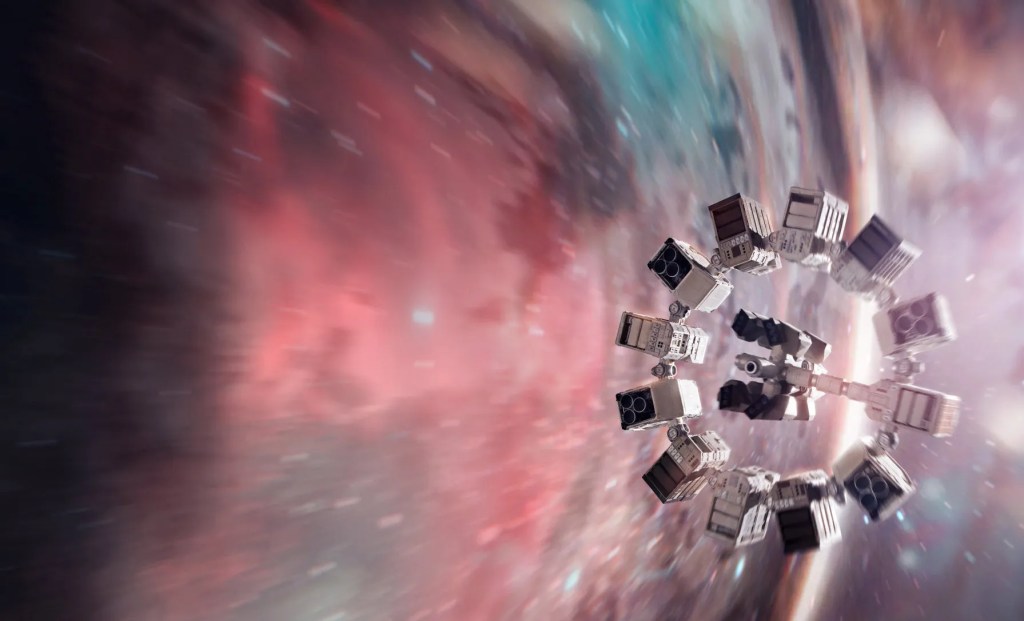
The final aspect of Interstellar that really stood out to me was its musical score. This is one area of the film that I absolutely loved from start to finish, as well as the general use of sound to mirror the themes and plotlines. For starters, I really liked the ticking sound that underlay the scenes where the crew were exploring Miller’s planet. When you watch this scene, you hear a tick every second or so, and this represents one full day on Earth. For those of us who struggle to comprehend the differences in time between the different planets, this is a really effective way to show what the astronauts mean when they say that one hour on Miller’s planet is equivalent to seven years on earth. When they say this out loud, it’s not so easy to understand, but representing this difference in time using sound is really effective and allows more audiences to stay immersed in the film. Similar to this, I really like the way that silence is used in some of the more chaotic scenes. For example, when there is an explosion, you brace yourself for a high-impact bang, but as the camera cuts to show the spacecraft, we are met with silence over an intense visual of an extreme explosion, showing fires that nobody would ever be able to survive. This silence reminds the audience that this film is set in space, where “nobody can hear you scream”. After the chaos of Manns trying to kill Cooper and strand the rest of the crew on Miller’s planet, the silence reminds us of the isolation these characters really feel, where it’s just the two of them at this point alone in a shuttle in space. They can’t even communicate with Earth past the videos they are able to receive from their loved ones. I feel like the bravery of each character really shines here; not only have they set off on a high-risk mission where they will likely sacrifice themselves to save humanity, but they are all alone in doing so.
Finally, it would be a crime to discuss Interstellar’s musical score and not talk about its iconic main theme. The rising and falling piano chords at the beginning emulate the way that they keep coming so close to finding a way to save humanity, but keep facing so many major struggles along the way that set them back, such as crewmates dying or them running out of fuel. The thickening texture mirrors the building tension that both the characters and the audience feel throughout the entire film, especially when they consider that failing this mission may bring an end to humanity. Failure is not an option here, so this thickened texture mirrors the immense amount of stress they must be feeling, which allows the audience to try and understand their true emotions past their brave faces. On top of this, the pipe organ gives the track a sort of ‘glimmering’ feel that makes me think of the spacecraft travelling past hundreds and thousands of stars and plants, and really brings the wonder and uncertainty of space alive. Although the thick texture harnesses feelings of fear and tension, the glimmering high notes show that space really is a place of beauty and magnificence, and a place that nobody will ever know the whole truth about.
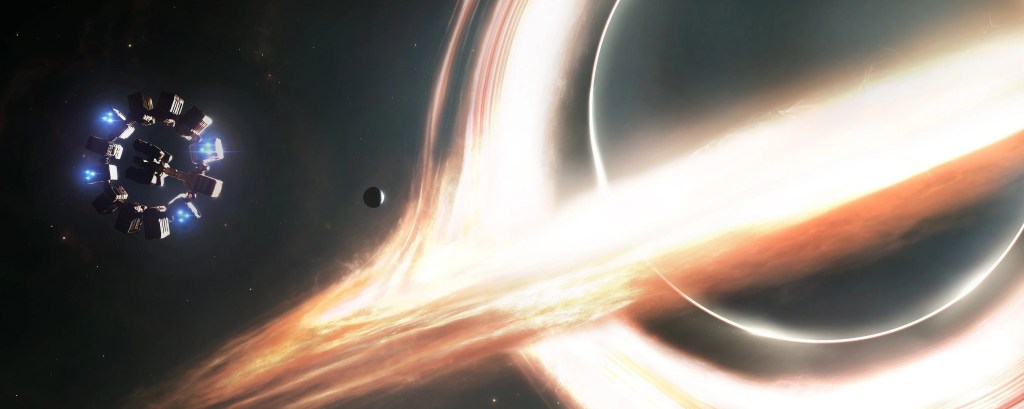
Despite the fact that I don’t watch too many space films, I did quite like the main themes found in Interstellar. I didn’t fully understand what was going on a lot of the time, and that might be a personal problem, but for me it was slightly too scientific for me to just relax and enjoy! I wasn’t too keen on the way some of the characters are represented, as even in space there seems to be clear gender roles and women are still stereotyped. However, the music is what really made it for me; I think it did a fantastic job at emulating the fear and wonder one must feel while exploring space. I didn’t feel too immersed in the plot because of my lack of understanding, but I think I’d get a much better sense of the film if I just sat and listened to the soundtrack. Perhaps not a film I’ll be rushing to see again, but Interstellar and the recent Artemis II mission have really inspired me to take a deeper dive into all things space, whether that be a documentary or a fictional film. There’s so much we don’t know, and so much for us to learn.
Close Up Capture Rating: 3.5/5


Leave a Reply