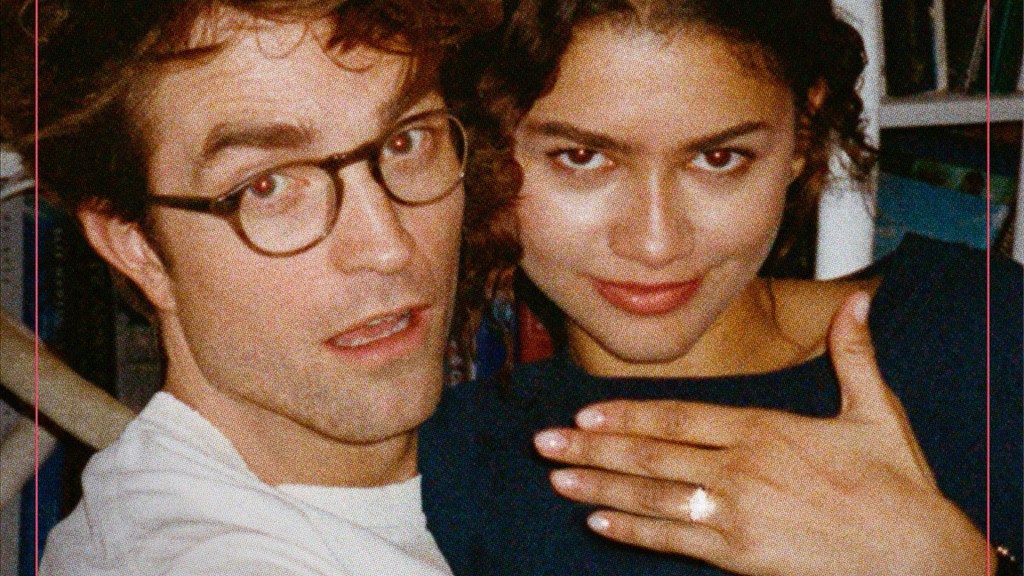
A close-up reading of the key themes found in Kristoffer Borgli’s appropriately named hit The Drama
I think it’s fair to say that, especially in the last decade, violence has been rife in the United States. Violence can represent itself in many ways: be it physical, psychological or sexual, and sometimes it feels like it can be so normalised that it is easy to brush off. In the last few years in America, we’ve seen riots, imbalances of power and wars take over the news and our social media timelines. These acts of violence often stem from one person’s actions, but affect the wider community as a whole and hurt those who shouldn’t even be involved. Sometimes we see acts of violence that impact people just like us, or sometimes we see people get hurt who aren’t in a position to help or defend themselves. One thing is for sure: violence has been over-shared in the media recently, meaning we can sometimes become desensitised to its true effects and implications, and sometimes there is a lack of consequence. Recently, I took a trip to the cinema to see Kristoffer Borgli’s aptly named drama-rom-com The Drama. The key themes in this film seem subtle at first, but the more you watch the film, the more you realise that violence is ingrained into American culture. Through watching The Drama, I realised why guns in particular seem so normalised in this country, and why education about gun control should be spread more widely over there.
When I watched The Drama in the cinema, one thing that really stood out to me was the reaction to certain scenes from the audience around me. Wherever you’re from, it’s certainly a shock to hear a character who you have liked up to now express that she planned a school shooting when she was younger. Of course, this really took me aback; when I watched the trailer I was dying to know what the worst thing Zendaya’s character, Emma, has ever done. When I watched it, I couldn’t guess what the big reveal might be – I assumed homicide. It might be crude to say, but we see murder so much in fictional media, that I wasn’t sure the impact would be as great as Borgli was hoping if that’s what the worst thing Emma has done was; as horrifying and wrong as murder is, it’s not a shock to see in film and TV. However, in my British eyes, I couldn’t think what else it could be, especially if this is meant to be the worst thing someone has ever done. Despite this, I was absolutely stunned when the innocent, charming female lead of this film announced that the worst thing she ever did was plan and almost go through with a school shooting. This appalling act of evil never even crossed my mind as a possibility. As horrified as I was, I noticed something strange in the audience around me: everyone seemed to laugh when she confessed her past sin. Then I noticed something even stranger: Charlie (Robert Pattinson) was also laughing. I’m not saying that anyone sat in that cinema screen found the concept of a school shooting funny, that would actually be wildly disturbing. Although I didn’t mirror this reaction, it made me think that maybe the laughter came from the prospect of such a foreign concept coming to fruition, as a school shooting is such an alien concept to UK audiences. Many of us are aware that the last time we had a school shooting in this country was in 1996, when the Dunblane Primary School massacre took place, killing 16 students and one teacher. The Firearms (Amendment) Act came about just one year after this tragedy; since then we have had no other catastrophes like it.
Although to British audiences and characters the idea of Emma planning a school shooting is so ridiculous (as it is so foreign to us), the American characters in The Drama (Rachel played by Alana Haim and Mike played by Mamoudou Athie) find no hilarity in the confession. Instead, they sit with horrified expressions on their faces and start to really grill Emma for her past mistakes. The difference in reactions between Charlie and Rachel and Mike shows the different cultural attitudes towards gun violence. Although people from both countries can take gun control seriously, it’s only the American characters who understand the real threat and danger at first, as they can imagine Emma’s plan becoming a reality. Rachel’s cousin was even caught in a school shooting when they were younger and has since been paralyzed in a wheelchair. School shootings are no longer a real threat in the UK, so imagining the act becoming a reality is something that most of us have to consider from someone else’s perspective. This scene really highlighted to me that the prospect of a school may be distant to most of us Brits, but for many Americans, it’s a real threat that can impact their everyday lives.
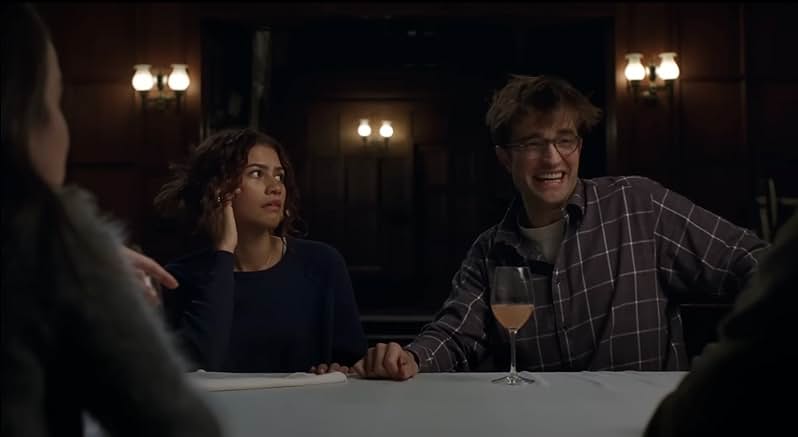
Another aspect of The Drama that made me realise that violence is way too normalised in America is all the gun imagery that Charlie begins to notice in his everyday life. For example, he finds a mug in their cupboard with an image of a gun on it and the words ‘Coffee or I’ll shoot’. Once Charlie starts to take notice to all the firearm imagery around him, he begins to feel disturbed by it. He takes the mug and throws it in the bin, clearly never wanting to see it again. When Emma asks about this, he doesn’t seem to feel like he can express his true feelings towards the once light-hearted mug, as the threat of violence seems much more immediate to him following Emma’s confession. There is also a picture of the couple stuck on their fridge where they are posing with finger guns; this makes Charlie wonder if these violent urges are still present in Emma during her adult life. Although he once believed he knew Emma deep enough to marry her, Charlie fears that she might still be the same person who intended to massacre her peers in her adolescent life; he starts to question if he really knows the real her. On top of this, Charlie flicks through a magazine full of models posing with guns. As he is flicking through the pages frantically, he sees one of them as Emma, showing his growing distrust for her true intentions. This is the point where Charlie realises that firearms are not just normalised in America, they are promoted. I think it’s interesting that Borgli chose to make Charlie an English character; it’s as if this violent imagery stands out to him more because it is not as familiar to him. Through his increasing awareness of the over-presence of guns in daily American life, the audience begins to notice it, too. As a British watcher, it stood out to me easily, but I wonder if it was a similar watching experience for American audiences?
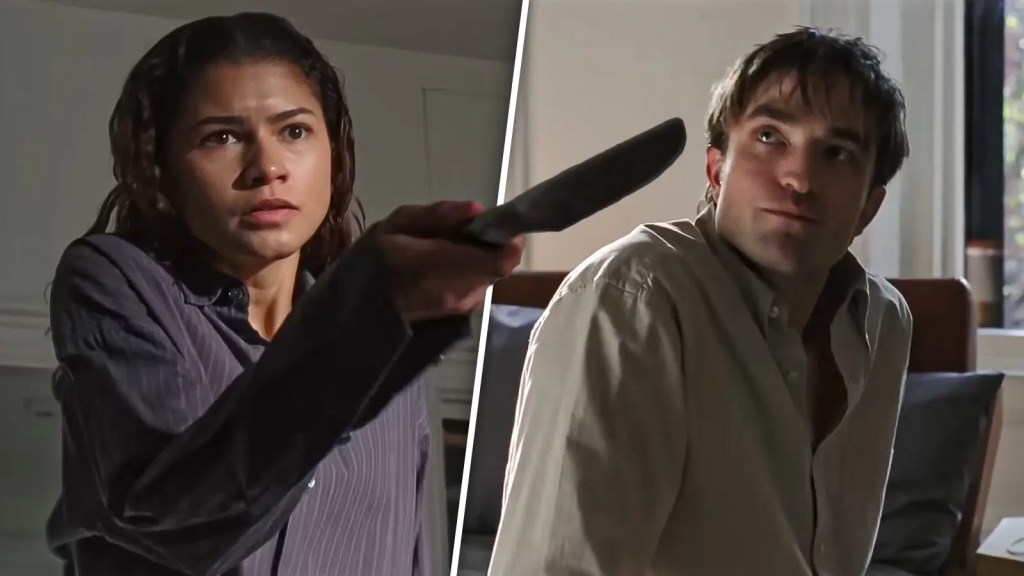
As well as physical violence, The Drama also comments on the prevalence of sexual violence in many relationships. This type of violence is more subtle in the film, but it’s still there. In one scene, where Charlie is considering the ways that Emma has been ‘playfully’ violent in the past, we see a brief memory of them having sex. During this scene, Emma slaps Charlie across the face as she smiles; he looks at her with shock and asks why she did that. Emma apologises and based on her facial reaction, she doesn’t seem to have considered that this isn’t necessarily something everyone wants to experience in this circumstance – she seems to think Charlie should have enjoyed it. However, if acts such as this are more prevalent in the media, film watchers will see it more frequently and deem it as ‘normal’ and perhaps even expected. For others, such as Charlie, this isn’t necessarily fun and poses questions about where the fun stops and the violence starts – how easy is it to take it too far? Later on in the film, Charlie initiates sex with his co-worker, Misha (Hailey Gates), although he doesn’t get very far before realising his mistake and breaks down crying. This initiation is extremely sudden, as if it’s an urge rather than a want. In doing so, Charlie rips Misha’s button-down blouse open, tearing off all the buttons. When it becomes clear to Misha that herself and Charlie will not be having sex, she walks away and says, “I can’t believe you ripped my shirt”. Here, it seems as though Charlie almost succumbed to the lifestyle he has seen around him, and felt the need to resort to violence in order to fit in with the rest of society. To me, this shows that perhaps the American way of living is more violent (especially in terms of firearm use), but maybe they don’t know how much it impacts their lives. Charlie has clearly lived in America for at least a couple of years, and in this moment, he is almost consumed by the normalised violence he sees around him. He is able to stop, and Emma never actually went through with the school shooting. These two characters saw sense and were able to calm themselves down and see sense, but The Drama indicates that not everybody in this country (as well as other places around the world) is able to do the same.
When I first booked my ticket to see The Drama, I didn’t actually know I was going to be watching a film that highlights the over-normalisation of violence in American society. I couldn’t imagine what the worst thing Emma has done in her life would be, but planning a school shooting certainly wasn’t it. Once the gun imagery became prevalent in the film, I came to the same conclusion as Charlie: yes, gun violence is rife in America, but maybe this is because gun imagery is everywhere and actually inescapable, and perhaps even encouraged. If nobody gets a break from seeing pictures of guns, or seeing the actual weapons when they shop in Walmart, it will become normalised and many people won’t see a problem with it. Every country has its cultural differences, but seeing a British character in a modern American setting really highlighted this problem to me, likely a similar experience for Norwegian director Kristoffer Borgli.
Close Up Capture Rating: 4.5/5
 Em's Close Up Captures
Leave a comment